
Cross-Domain IP Solution Architect @ Nokia | Ex-Ericsson & Huawei
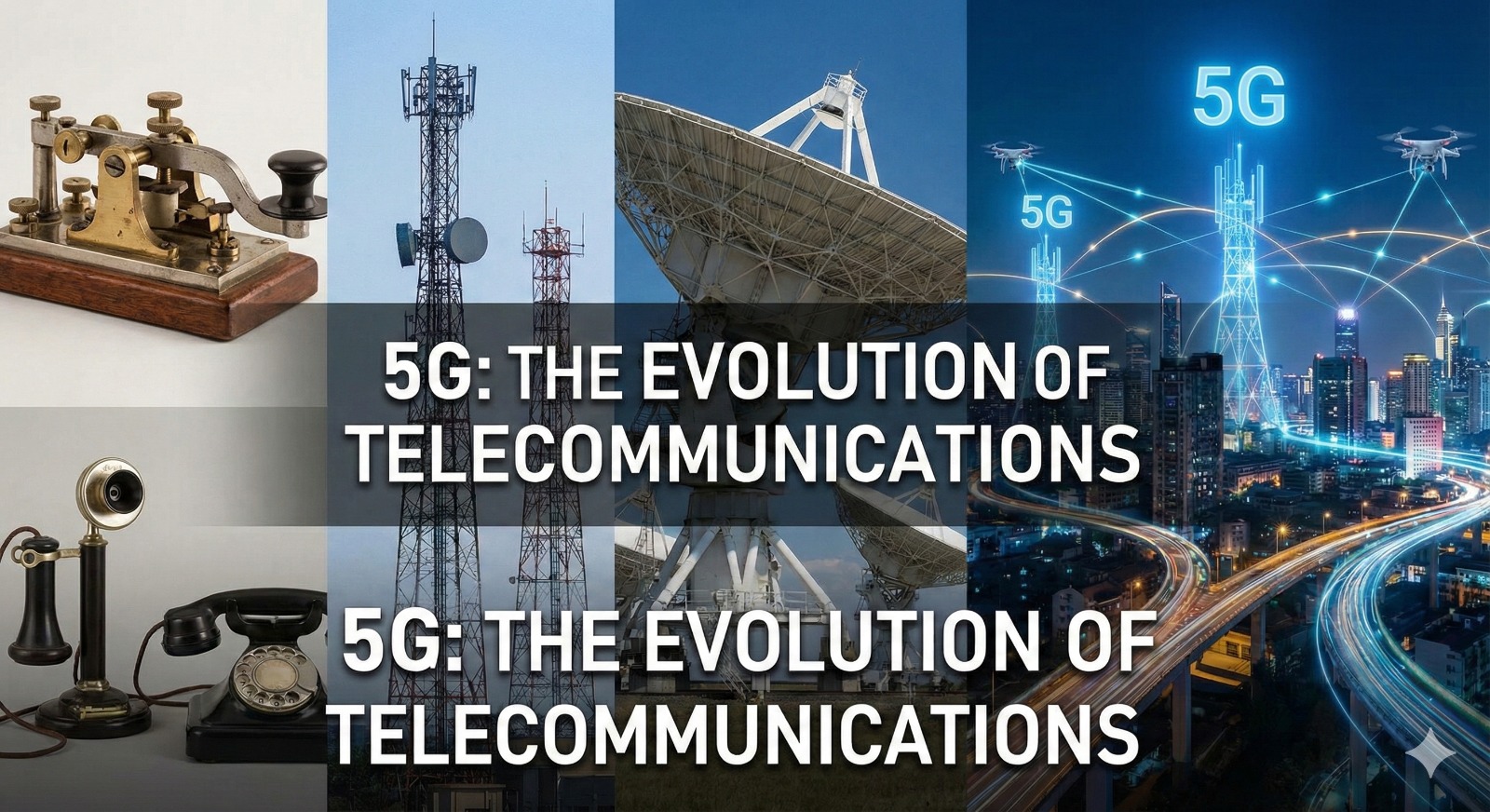
The evolution of telecommunications is not just about faster speeds; it is about the fundamental architectural shift from static hardware to intelligent, adaptive software.
My career has mirrored this industry transformation. I started as an NFV Engineer at Huawei, virtualizing network functions and implementing IMS/OSS. I then moved to Ericsson, specializing in the 5G Core, where I deployed critical Control Plane functions like SMF (Session Management Function) and AMF (Access and Mobility Management Function). Today, as an Cross-Domain IP Solution Architect at Nokia, I design the end-to-end architectures that tie these complex domains together.
From this vantage point, I want to discuss how 5G has matured, how AI is revolutionizing our operations, and where we are heading with 6G.
The Real Promise of 5G: Beyond the Hype
While consumers focus on download speeds, architects focus on URLLC (Ultra-Reliable Low Latency Communications). The shift from 4G to 5G was not just an upgrade; it was a rewrite of the rules that allows for mission-critical applications:
Remote Surgery: We have moved beyond theory. The low latency of 5G allows surgeons to operate robotic arms miles away with immediate haptic feedback. This requires a network that never fails, something impossible with legacy architectures.
Autonomous Driving: For Level 5 autonomy, cars need to “talk” to the infrastructure (V2I). 5G provides the reliable pipe for this massive data exchange, allowing vehicles to react to traffic signals and obstacles in milliseconds, far faster than human reflexes.
AI: The New Network Operator
In my early days working with OSS (Operations Support Systems), network optimization was often reactive and manual. Today, Artificial Intelligence is changing the game.
We are moving toward “Zero-Touch” networks. AI is not just a buzzword; it is becoming the engine that drives the 5G Core components I used to configure manually.
Dynamic Network Slicing: Imagine a scenario where a stadium fills up. Previously, engineers had to anticipate load. Now, AI models can trigger the SMF to instantiate new network slices dynamically, dedicating specific bandwidth to video streaming while isolating critical emergency services on another slice.
Self-Healing & Auto-Configuration: AI algorithms can now deploy networks, auto-configure parameters, and even predict node failures before they disrupt the IP transport layer, rerouting traffic automatically.

The Nokia and NVIDIA Paradigm Shift
The convergence of Telco and AI hardware is accelerating. A prime example is the recent strategic collaboration between Nokia and NVIDIA.
This partnership focuses on AI-RAN (Radio Access Network). By integrating NVIDIA’s Grace Hopper Superchips into Nokia’s infrastructure, we are enabling AI processing right at the edge of the network. This doesn’t just improve performance; it completely transforms the architecture, allowing the network to use deep learning to optimize spectral efficiency in real-time.
Conclusion: The Cognitive Network of 6G
As we look toward the future, the distinction between the “network” and the “cloud” is vanishing. The combination of the robust 5G Core architectures we build today with the adaptive power of AI is laying the groundwork for 6G.
We are building a future where the network is not just a pipe, but a cognitive entity capable of sensing, thinking, and acting.

Autor : Sergio Enrique Rivera Carballido
Solution Architect @Nokia | Cloud Solutions Admin | Telematics Engineer | AI optimist